If you have ever heard of a roofing project increasing in price halfway through, you are not alone.
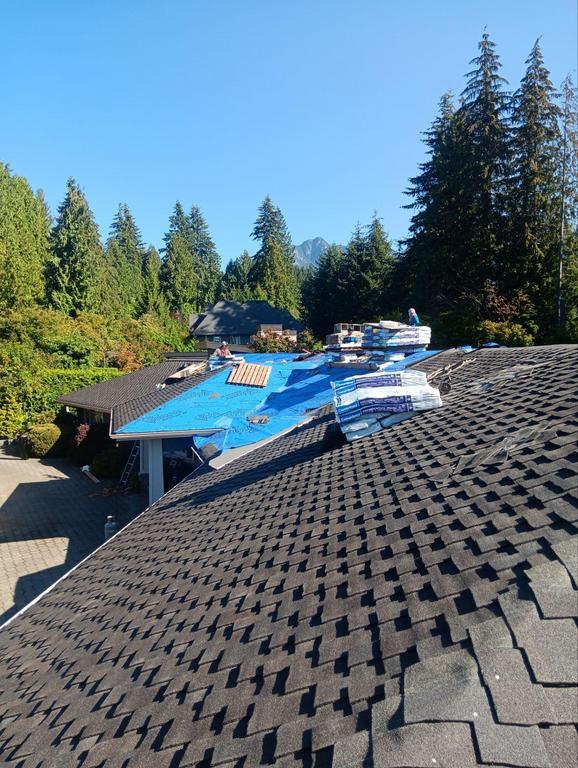
We hear these stories often. And it happens with us on rare occasions.
It, unfortunately, is a common issue in our industry. The contractor starts the job, removes the existing roof, and then informs the homeowner that additional work is required. The cost goes up, sometimes significantly.
Understandably, homeowners find themselves asking how that could happen after agreeing to a price in the first place.
The cause of mid-project price changes
In most cases, it comes down to how the original estimate was prepared.
Some companies’ estimates are based on limited information. Measurements may come from satellite imagery, and assumptions are made about what lies beneath the shingles.
Without a full inspection, key details are simply not known when the quote is provided.
Once the roof is opened up, those unknowns become visible.
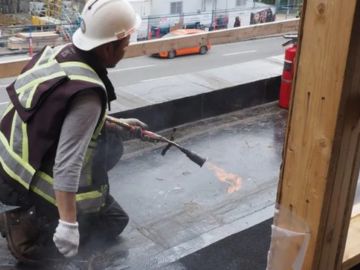
There may be multiple layers of old roofing that need to be removed. The decking underneath could be damaged and require replacement. Flashing, ventilation, or structural issues may come to light that were not apparent from the outside.
At that point, the contractor issues a change order to cover the additional work.
Why it feels like a surprise
From a homeowner’s perspective, it feels as if the price has changed unexpectedly, but in reality, the estimate was never fully accurate to begin with. It was based on assumptions rather than confirmed conditions.
Some contractors include broad clauses to account for these unknowns. Others keep the initial number as low as possible to stay competitive, knowing adjustments may come later.
Either way, the result is uncertainty for the homeowner.
How we try to avoid this situation
The best way to avoid mid-project price changes is to reduce unknowns before the project begins.
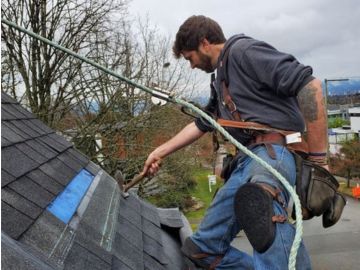
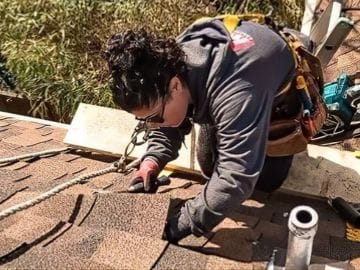
So our roofing technicians conduct a thorough in-person inspection before we provide a quote.
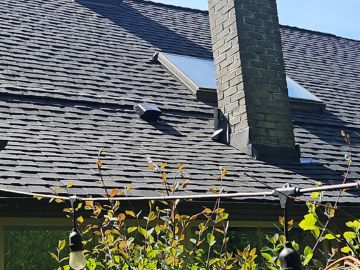
A proper inspection confirms the number of roofing layers, assesses the deck material, and identifies issues with flashing, penetrations, or ventilation.
When these factors are understood in advance, the estimate can be built on real conditions rather than assumptions.
This is our standard practice. We inspect every roof before preparing an estimate, ensuring the scope of work is clearly defined from the start. As a result, mid-project price changes are rare. But when they do happen, we do our best to make our client happy. In one case, the client was so impressed and pleased with our handling of the situation that they wrote us a glowing online review.
The bottom line
If one estimate comes in significantly lower than others, it is worth asking how it was prepared.
An accurate estimate based on a proper inspection may not always be the lowest number upfront, but it is far more likely to hold true once the project is underway.
Taking the time to ensure the estimate is based on real information can prevent costly surprises later.